Independent portable-power field guide

Build the power margin your real loads require

An independent field guide to portable power sizing, BLUETTI model fit, solar recharging, outage load plans, and long-term ownership.

Bottom lineStart with the load and recovery plan. BLUETTI offers credible options across several sizes, but the exact model earns a place only when runtime, startup headroom, recharge, connection, mobility, and safe fallback all agree.
✓ 24 product sources recorded↻ Last materially reviewed 2026-08-28↗ Limitations included
Best for: Readers willing to measure loads before choosing a modelStart with: UnderstandBuilt around: evidence → fit → action
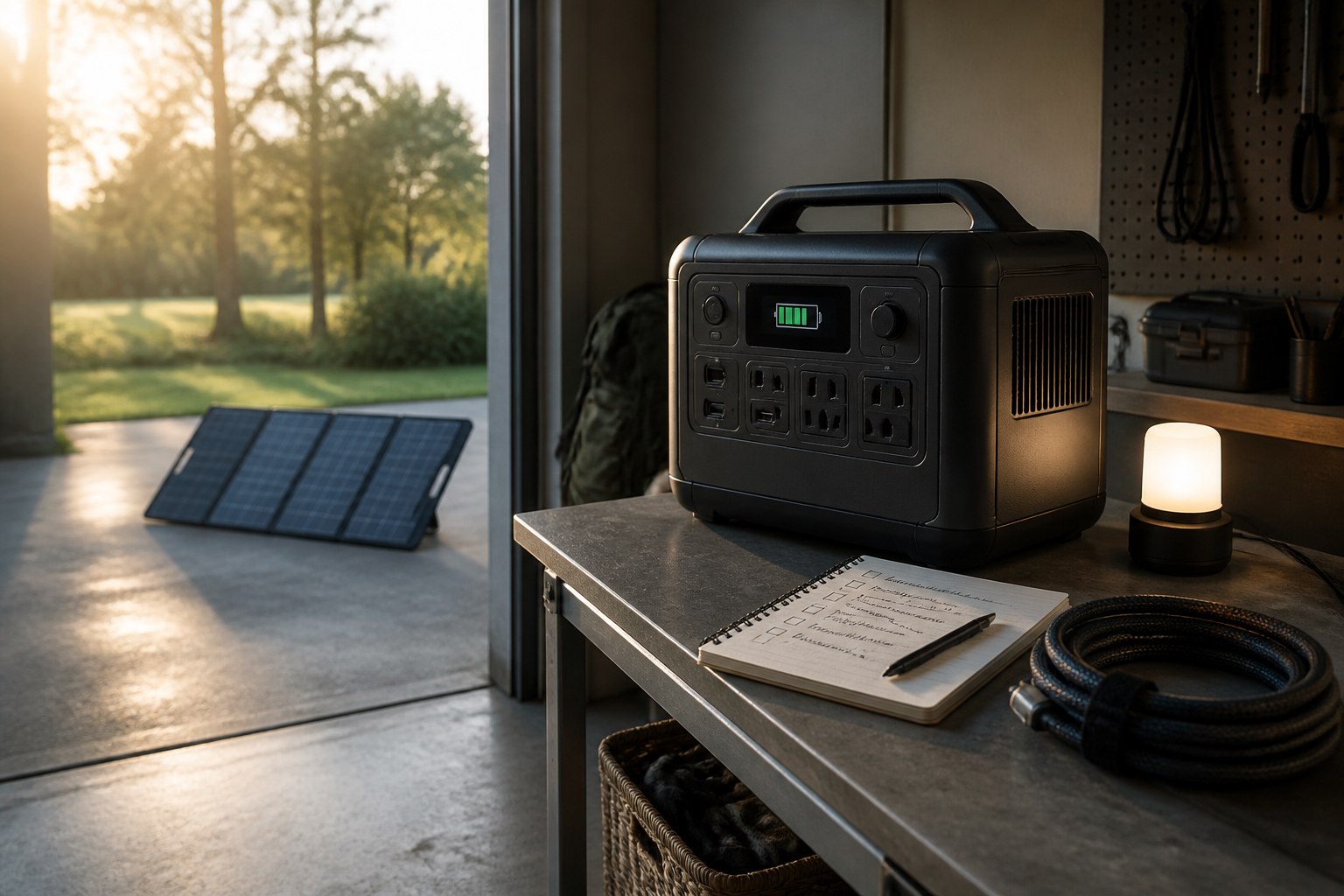
Unbranded portable power station beside a folding solar panel, outage checklist, and work light in a calm garage planning scene
Capacity is not resilience.Load → runtime → reserve → recovery.
Start withThe loadsMeasure running watts, startup demand, daily hours, and consequence.
Runtime unitUsable WhRated capacity needs an efficiency and reserve allowance.
Recovery gateNext cycleThe system must replenish before the next required operating period.
Best outcomePracticed planConnections, shutdown, charging, storage, and fallback are tested and recorded.
Use the guide well

What matters before the feature list.

These field notes explain the product, workflow, and tradeoffs that can change the decision.

Start here

Start with the outage or trip—not the battery shelf

Write down the loads that protect safety, food, communication, work, sleep, or a repeated mobile workflow. Measure running watts, startup behavior, daily hours, and the consequence of stopping. That brief determines capacity and output before a model name enters the decision.

  • The best system is the smallest complete plan with credible reserve and replenishment.
System model

Keep output, energy, and recharge as three separate gates

Continuous and surge output decide whether the station can run the load. Usable watt-hours shape runtime. AC, solar, vehicle, or generator input decides whether the system can recover before the next cycle. Passing only one or two gates creates a fragile plan.

  • Use the runtime calculator and recharge selector below to make the hidden assumptions visible.
Safety boundary

Treat connection and fallback as part of the equipment

A plug-in appliance, an RV, a vehicle charger, and fixed home circuits require different connection plans. Cables, voltage, transfer equipment, weather, temperature, and qualified installation can matter more than an extra port. Every critical load also needs a fallback with a different failure mode.

  • Never improvise backfeeding or use damaged battery equipment.
Evidence standard

Choose the model only after the plan can be tested

Current product pages and manuals establish exact specifications; public safety and resilience guidance establishes boundaries; a load meter and real rehearsal establish household fit. Record the tested result, charging sequence, shutdown process, storage routine, and the one fact that would trigger a redesign.

  • This publication does not invent first-hand testing or hide poor-fit cases.
Useful before purchase

Make runtime and recovery measurable.

Estimate conservative runtime and choose the recharge architecture closest to the real operating cycle.

Runtime and reserve calculator

How long can the load run?

Enter rated capacity, average load, and the reserve you do not want to spend. The calculator uses a conservative conversion allowance.

Conservative planning runtime5.6 hoursPlanning estimate after conversion allowance and stated reserve. Validate the exact load and model before relying on it.
Recovery-path selector

How will the battery recover?

Choose the closest operating cycle.

Start with this system shapeChoose a recovery pathThe right capacity depends on daily energy, time between recharges, available inputs, and the consequence of falling short.
Evidence hierarchy

Measured loads and exact-model limits carry more weight than category promises.

Load labels and meters, current manuals, safety guidance, model pages, and real rehearsals answer different questions.

Measured load and rehearsal
Strongest for the actual device, workflow, and runtime
Exact current model manual
Strongest for limits, connections, operation, and protection
Government safety and resilience guidance
Strong for system boundaries and emergency planning
Merchant category page
Useful for discovery, not proof of a complete power plan
Explore the guides

Continue with the guide that resolves the next power decision.

Every route owns a distinct question and points toward a measurement, model check, connection decision, or rehearsal.

Complete guide

What is a portable power station—and what is it not?

A portable power station combines a rechargeable battery, battery-management electronics, an inverter, charging inputs, and output ports in one movable unit. It stores electricity; it does not create fuel-free energy on its own. Use current primary documentation, measured loads, and a tested recharge and fallback plan before relying on the system.

Read the guide →
Practical guide

Watts vs watt-hours: the two numbers that prevent most sizing mistakes

Watts describe the rate at which a device uses power. Watt-hours describe stored energy. A station can have enough inverter watts to start a load and still have too few watt-hours to run it for the required time. Use current primary documentation, measured loads, and a tested recharge and fallback plan before relying on the system.

Read the guide →
Practical guide

Continuous inverter output explained

Continuous output is the sustained AC load the inverter is designed to support under stated conditions. Add the simultaneous loads that may run together and leave operating headroom. Use current primary documentation, measured loads, and a tested recharge and fallback plan before relying on the system.

Read the guide →
Practical guide

Surge watts explained: motors, compressors, and startup headroom

Compressors, pumps, and some power supplies can draw more power at startup than during steady operation. A reliable plan verifies both sustained and startup demand rather than relying on one nameplate number. Use current primary documentation, measured loads, and a tested recharge and fallback plan before relying on the system.

Read the guide →
Practical guide

Usable battery capacity: why the label is not the runtime

Advertised watt-hours are a battery specification, not guaranteed energy at an outlet. Inverter losses, conversion voltage, temperature, load size, idle draw, and protective reserves reduce usable output. Use current primary documentation, measured loads, and a tested recharge and fallback plan before relying on the system.

Read the guide →
Practical guide

Portable power efficiency: where the watt-hours go

Energy is lost while charging, storing, converting, and delivering power. Runtime planning should use a conservative efficiency factor and then be validated with the actual load before an emergency. Use current primary documentation, measured loads, and a tested recharge and fallback plan before relying on the system.

Read the guide →
Practical guide

How to estimate portable power runtime without false precision

Estimate runtime by multiplying rated watt-hours by a conservative usable fraction, then dividing by the measured average load in watts. Treat the result as a planning range, not a promise. Use current primary documentation, measured loads, and a tested recharge and fallback plan before relying on the system.

Read the guide →
Practical guide

Build a critical-load audit before choosing a battery

List only the loads that protect safety, communication, refrigeration, medical routines, or work continuity. Record running watts, startup watts, daily hours, and priority before adding comfort devices. Use current primary documentation, measured loads, and a tested recharge and fallback plan before relying on the system.

Read the guide →
Practical guide

LiFePO4 batteries explained for portable power buyers

Lithium iron phosphate is a lithium-ion chemistry used in many current portable stations. Chemistry is one part of a safe system; enclosure, controls, certifications, charging design, and use conditions still matter. Use current primary documentation, measured loads, and a tested recharge and fallback plan before relying on the system.

Read the guide →